
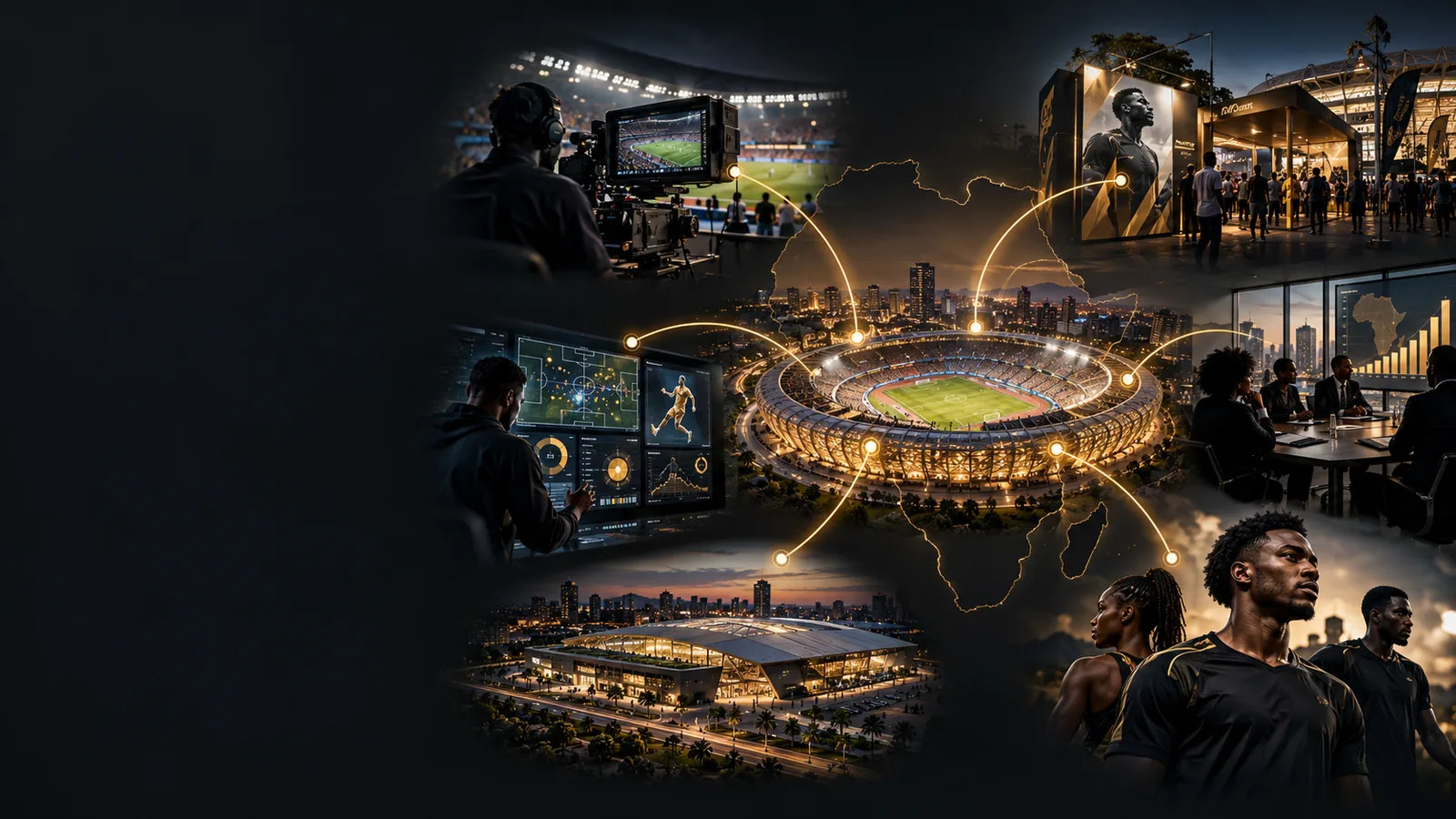
The African sports deal market is often discussed as though every transaction belongs in the same category. It does not.
A broadcast licence, a club investment, a sponsorship, a stadium concession and a sports-tech funding round may all be “sports deals”, but they allocate risk and create value in completely different ways.
A useful deal landscape therefore starts with transaction type.
Media-rights deals
These transactions monetise access to live or recorded content. The variables include exclusivity, platform, territory, language, term, production obligations, minimum guarantees and revenue share.
CAF's increasingly segmented tenders demonstrate how granular rights packaging can become. Digital, free-to-air and pay-TV windows can serve different commercial objectives.
Sponsorship and commercial partnerships
Sponsorship is shifting from fixed inventory toward integrated participation. A modern partnership can include content, data, fan activation, hospitality, digital products and customer acquisition.
Telcos are particularly significant because they can combine sponsorship with connectivity, billing and distribution.
Equity and franchise investment
Equity transactions provide ownership in the underlying sports company or property. NBA Africa, PFL Africa and investments made through Helios Sports and Entertainment illustrate the emergence of sports IP as an ownership asset.
The investor is underwriting long-term enterprise value rather than only the current season's revenue.
Infrastructure and real-estate deals
This category includes stadium construction, venue concessions, public-private partnerships, mixed-use sports districts, training centres and hospitality-led developments.
The commercial question is utilisation: how does the asset generate revenue outside peak competition days?
Zaria Court Kigali provides a useful model because sport is combined with hotel, events and lifestyle real estate.
Technology, data and platform deals
Sports-tech transactions range from SaaS procurement to venture investment and revenue-share partnerships. The key issue is whether the technology remains a vendor cost or becomes embedded infrastructure.
Platforms that control recurring workflows — registration, ticketing, fan identity, data or production — can become strategic partners rather than software suppliers.
Production and distribution partnerships
Many African competitions require partners willing to share the risk of producing and distributing content. Structures can include production-for-rights, minimum guarantees, revenue shares, barter and joint commercialisation.
These deals are particularly relevant to under-produced leagues where the production investment itself creates the asset that can later be sold.
Talent and athlete-economy transactions
Player representation, academy investment, transfer participation, image rights and athlete-led ventures form another transaction layer. This market is commercially significant but often less transparent than media and sponsorship.
Better performance and transaction data will gradually make athlete-related capital easier to price.
Who sits across the table?
The deal ecosystem includes federations, leagues, clubs, broadcasters, streamers, telcos, agencies, governments, DFIs, private-equity funds, venture investors, venue operators, technology vendors and athlete representatives.
The important trend is convergence. A telco can be sponsor, distributor and payments partner. A private-equity investor can own IP and infrastructure. A broadcaster can become a streaming platform. A venue can become a real-estate and data business.
That convergence is making African sports transactions more complex — and potentially more valuable.
SIA takeaway
The African sports deal landscape is not one market but a set of interlocking transaction markets. The next step for the industry is greater transparency: deal comparables, disclosed structures and consistent valuation metrics. Better transaction intelligence will reduce uncertainty and improve the quality of negotiation for both African rights-holders and incoming capital.
Editorial source notes
- CAF media-rights tenders, 2025–2026.
- IFC / Proparco / HSEG transaction, 2025.
- NBA Africa and PFL Africa investment structures.
- Zaria Court Kigali financing and operating model.
- African sports deal-tracker initiatives and public transaction disclosures.
Published by the Sports Intelligence Africa editorial team.