
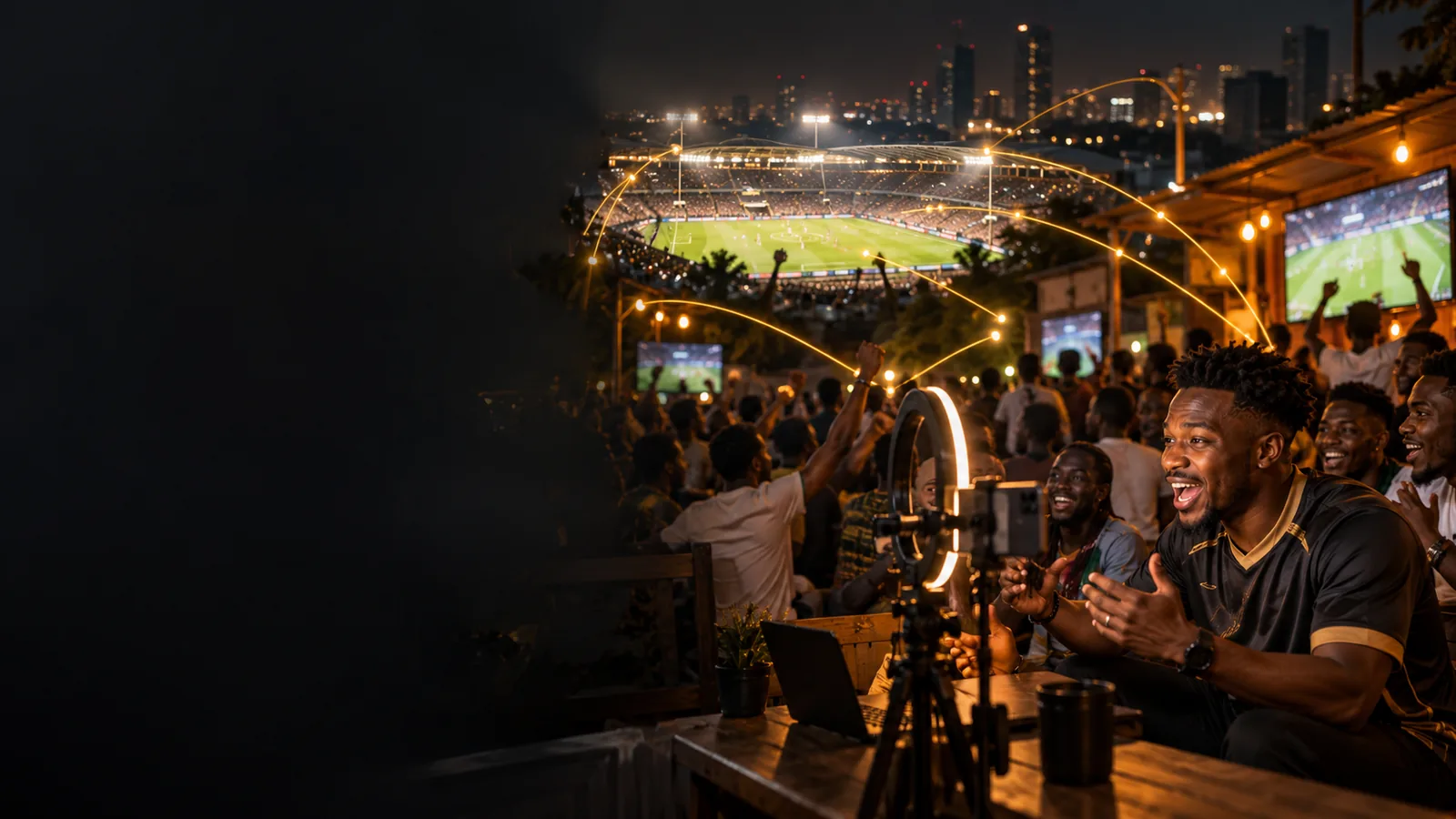
The broadcast used to be the destination. Increasingly, it is the source material.
A live match still matters. But for many fans, the lasting experience of that match is distributed through a second layer: creator reaction, clips, memes, WhatsApp groups, short-form video, fan pages, podcasts, live chats and local-language commentary.
This community layer does not replace broadcast. It extends its surface area.
Attention now travels through people
Sports media was once organised around channels. Digital sport is increasingly organised around communities and personalities.
A supporter may never follow the official league account, but may watch the same league daily through a creator. A young fan may learn about an athlete through TikTok before ever seeing a full match. A diaspora supporter may rely on WhatsApp or YouTube to remain connected to a local club.
The distribution advantage increasingly belongs to whoever is trusted inside the community.
This is particularly significant in African markets, where languages, local identities and cultural context cannot always be served efficiently by one central media product.
The value of shoulder content is rising
CAF has explicitly linked stronger global distribution of AFCON to its expanded production and distribution of highlights and shoulder content. After AFCON 2025, the confederation reported significant growth in media exposure and digital consumption across new territories.
Shoulder content — interviews, training-ground footage, explainers, player stories, short highlights and behind-the-scenes material — extends the life of a rights property beyond the 90 minutes.
It also creates more inventory for sponsors and more opportunities for algorithms to surface the competition to casual audiences.
Rights-holders need creator architecture, not creator anxiety
The instinct of rights owners is often to protect footage by limiting use. Protection is necessary, particularly for premium live rights. But an overly restrictive policy can reduce discovery and cultural relevance.
A more sophisticated model separates what must remain exclusive from what should travel widely.
That can include licensed creator clip libraries, delayed highlights, approved vertical-video packages, reaction windows, press-room content and local-language creator access. The goal is to let communities amplify the property without undermining the value of the core rights.
Community can become measurable distribution
The creator layer is often treated as soft marketing because measurement is fragmented. That is changing.
Unique links, platform analytics, promo codes, fan-registration mechanics and CRM integration can connect community activity to outcomes. A sponsor can measure not only views but sign-ups, competition entries, ticket sales or product redemptions.
When that happens, community becomes an accountable media channel.
Culture is a defensible advantage
African sport competes for attention with the world's largest leagues. It cannot always compete on production budgets. It can compete on proximity, identity and cultural specificity.
Local humour, language, music, supporter rituals and player stories are not peripheral to the media product. They are the texture that makes a property difficult to copy.
The organisations that give creators structured access to that texture can expand reach without trying to manufacture every piece of content centrally.
SIA takeaway
The next African sports distribution strategy should be built in two layers: the controlled rights layer and the participatory community layer. Broadcast delivers the event. Community gives it velocity, language and cultural meaning. Rights-holders that design for both will reach further and create more sponsor inventory than those that treat social media as a promotional afterthought.
Editorial source notes
- CAF, AFCON 2025 global audience and shoulder-content distribution announcements, 2026.
- GSMA, Mobile Economy Africa 2026.
- PwC Africa Entertainment & Media Outlook, mobile and digital advertising trends; SIA project file.
Published by the Sports Intelligence Africa editorial team.