
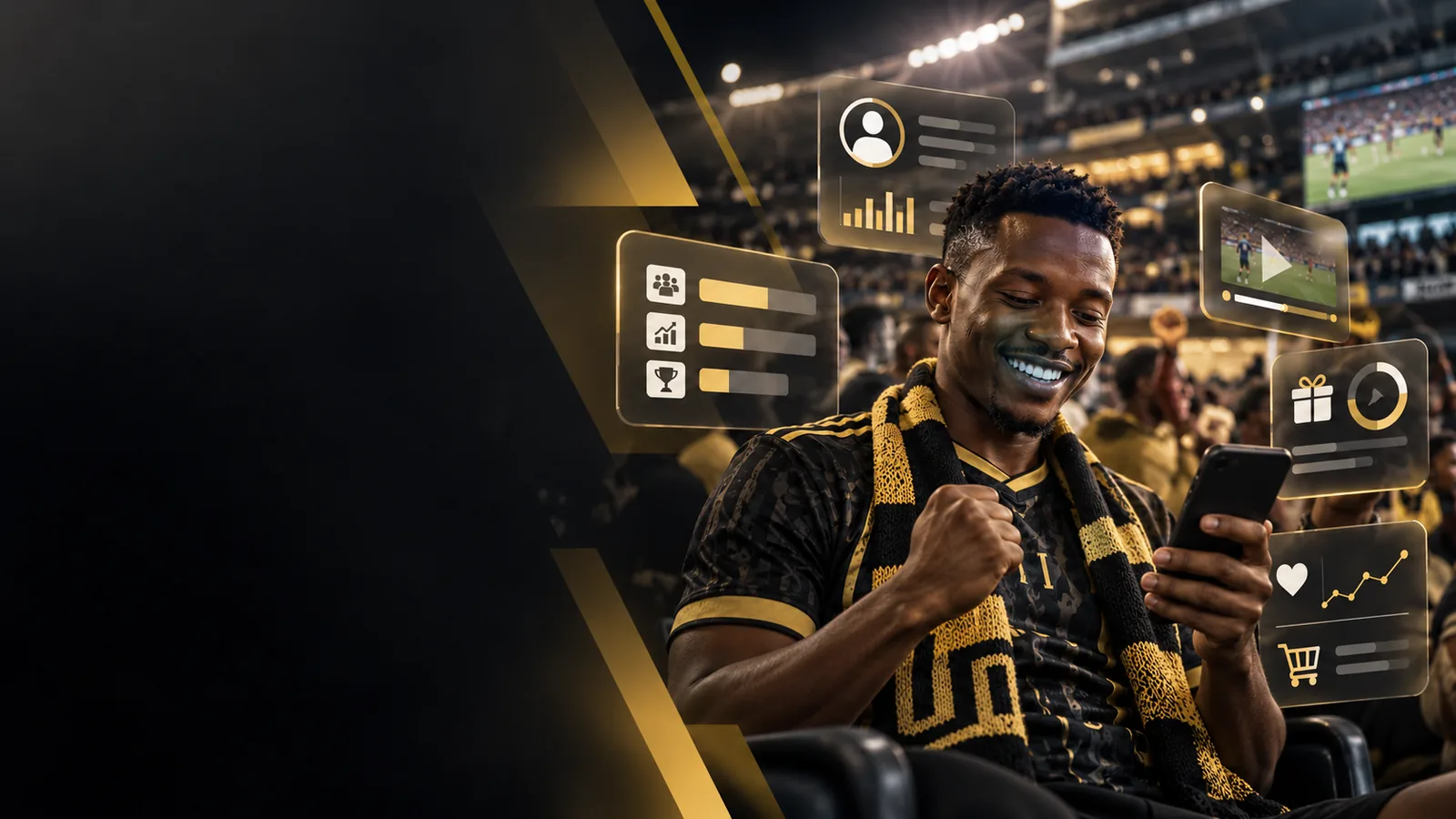
Sports sponsorship has traditionally been sold through exposure: logo size, signage, broadcast minutes, hospitality and association with a team or event.
Those assets still matter. But the digital fan is changing the sponsor's question from “How many people saw us?” to “What did the audience do?”
For African rights-holders, that is both a challenge and an opportunity.
Reach is no longer enough
Large sports properties can still generate enormous audiences. CAF reported billions of television contacts and digital views around AFCON 2025. But a sponsor increasingly wants to understand the audience behind that reach: age, market, interest, participation, repeat engagement and purchase intent.
This is where many African rights-holders remain under-instrumented. They can demonstrate visibility but struggle to connect exposure to known fan behaviour.
The strategic response is to build first-party fan intelligence into the sponsorship product.
Sponsorship is moving into the product
Orange's CAF partnership is a useful example. Around AFCON 2025, the company's Max it super-app became part of the fan experience, combining live and on-demand content, real-time information and an AI-powered conversational assistant. Orange also created connected physical fan zones.
This is not sponsorship sitting around the sport. It is sponsorship operating inside the fan journey.
The more useful the sponsor becomes — connectivity, payments, rewards, access, statistics, transport, ticketing — the more naturally the brand can participate in the experience.
Every activation should create a measurable event
Digital sponsorship works best when the fan can do something: vote, predict, register, collect, redeem, watch, buy, share or unlock.
Each action can create a measurable event in the data layer. Over time, rights-holders can build sponsor products around verified participation rather than estimated exposure.
This is the logic behind emerging African fan-engagement platforms that combine polls, loyalty, CRM and sponsor activation. The technology itself is not the differentiator. The differentiator is the ability to connect fan action to sponsor objectives.
The rights-holder needs to own the measurement
If all fan activity occurs on third-party social platforms, the rights-holder remains dependent on platform metrics. Those metrics can be valuable but limited.
A stronger model uses social media for reach and owned platforms for conversion. A social clip may drive the fan to a competition, member account, ticket offer, loyalty programme or sponsor reward where the organisation can obtain permissioned first-party data.
This is how sponsorship can move from campaign reporting to customer intelligence.
Better measurement should raise price quality
The purpose of data is not automatically to charge more. It is to price more intelligently.
Some sponsors value mass reach. Others value young urban consumers, mobile-money users, parents, runners, women fans or a specific national market. If a rights-holder can show the size and behaviour of those segments, it can create differentiated inventory rather than selling every partner the same package.
That improves yield and reduces clutter.
SIA takeaway
African sports sponsorship is moving from visibility to verifiable participation. Rights-holders that capture fan identity, design interactive journeys and measure outcomes will be able to sell fewer, more valuable partnerships. The sponsor of the future is not simply buying space around the game. It is buying a measurable role in the fan relationship.
Editorial source notes
Orange / CAF sponsorship partnership and AFCON 2025 Max it activation.
Orange Max it active-user disclosure and MaxGoal AI fan assistant, December 2025.
CAF AFCON 2025 audience announcements.
FanXPlay and ProTouch fan-engagement product models, 2026.
Published by the Sports Intelligence Africa editorial team.