
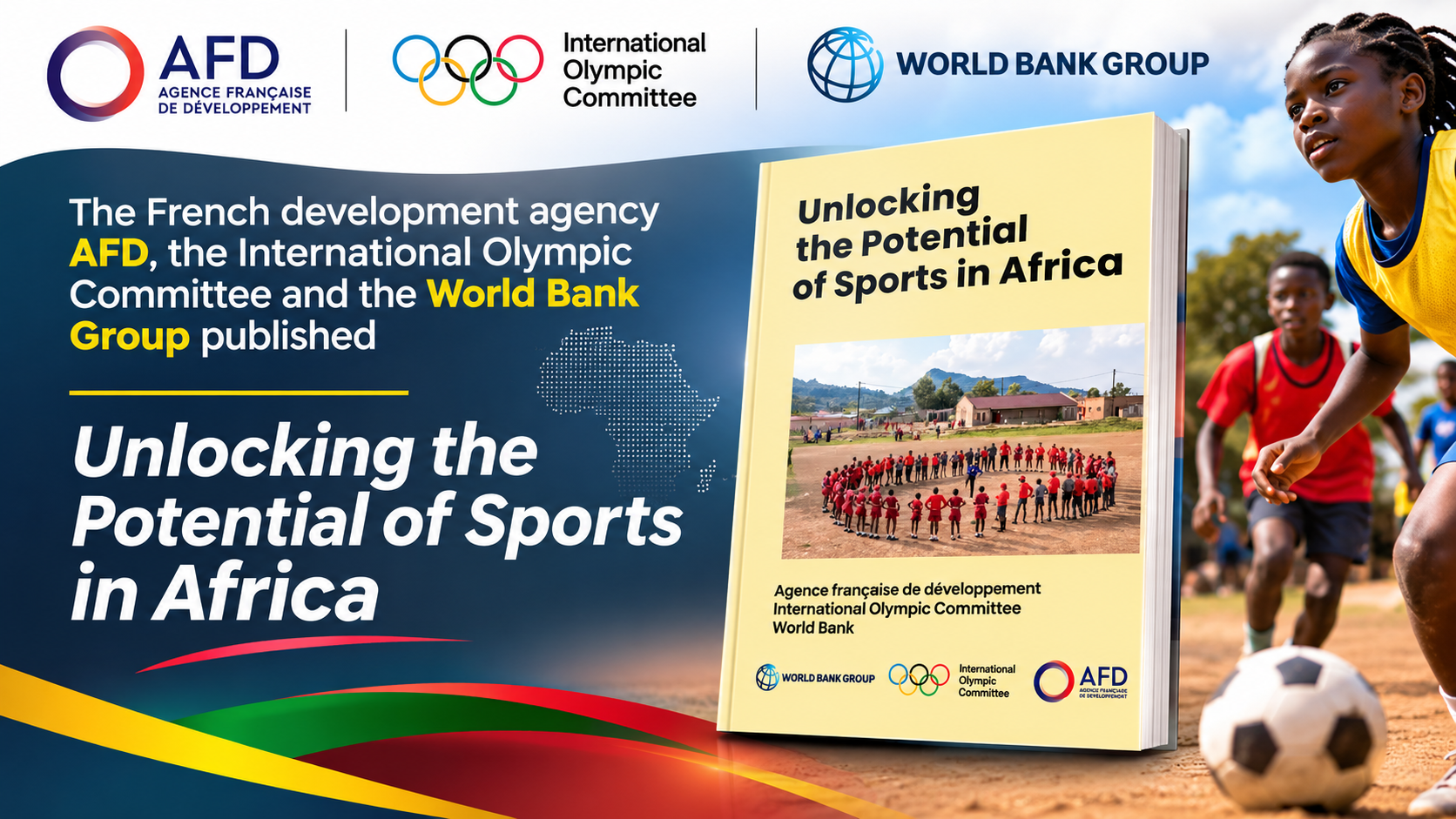
The French development agency AFD, the International Olympic Committee and the World Bank Group published Unlocking the Potential of Sports in Africa on 4 November, launching it in Dakar during the Youth Olympic Games. The International Finance Corporation (IFC), the Development Bank of Southern Africa (DBSA) and the Laureus Sport for Good Foundation contributed. The report draws on an Ipsos Senegal survey in nine African countries, a mapping of sports policy in nearly 20 governments and a review of research on sport's development impact.
According to AFD, just over two in three people surveyed take part in at least one sport, led by football (31%), athletics and running (30%) and walking (26%). Household surveys show sport accounts for nearly 3% of direct employment in the cities studied, much of it informal. Informal sports businesses cite access to finance (43%), lack of information or heavy administration (24.5%) and the cost of procedures (20.4%) as their main obstacles. The authors find that foreign companies capture much of the value added, and call for better data, support for local small businesses and public-private partnerships to build community facilities.
Why it matters commercially
Most commercial analysis of African sport, including ours, starts at the top: media rights, sponsorship, betting and stadiums. This report looks at the base: participation, kit, coaching, facility management and the small firms that serve them. Its central finding is uncomfortable. Demand is mass-market, but value leaks abroad and the local businesses that could capture it are informal and short of credit.
SIA's view: the most useful thing here is the evidence, not the advocacy. A multi-country participation survey, signed off by the IFC and DBSA as well as the IOC, gives brands, kit makers and lenders a better basis for sizing grassroots demand than the estimates usually quoted. Two cautions. The 3% employment figure applies to the cities studied, not to Africa as a whole, and it should not be quoted as a continental number. And the report identifies a financing gap without, so far, a financing commitment to close it. The test is whether development lenders now fund local sports SMEs and community facilities, not only showpiece stadiums.
What to watch
- 13 November 2026: Dakar 2026 closes. Watch for any financing or programme commitments from the report's partners.
- 19 June–17 July 2027: AFCON 2027 in Kenya, Tanzania and Uganda, a test of whether new stadiums are planned for community use after the tournament.
Sources: AFD press release, 4 November 2026; AFD, "Sport in Africa: unlocking its economic potential", November 2026; AFD report page, 4 November 2026.
Published by the Sports Intelligence Africa editorial team.