
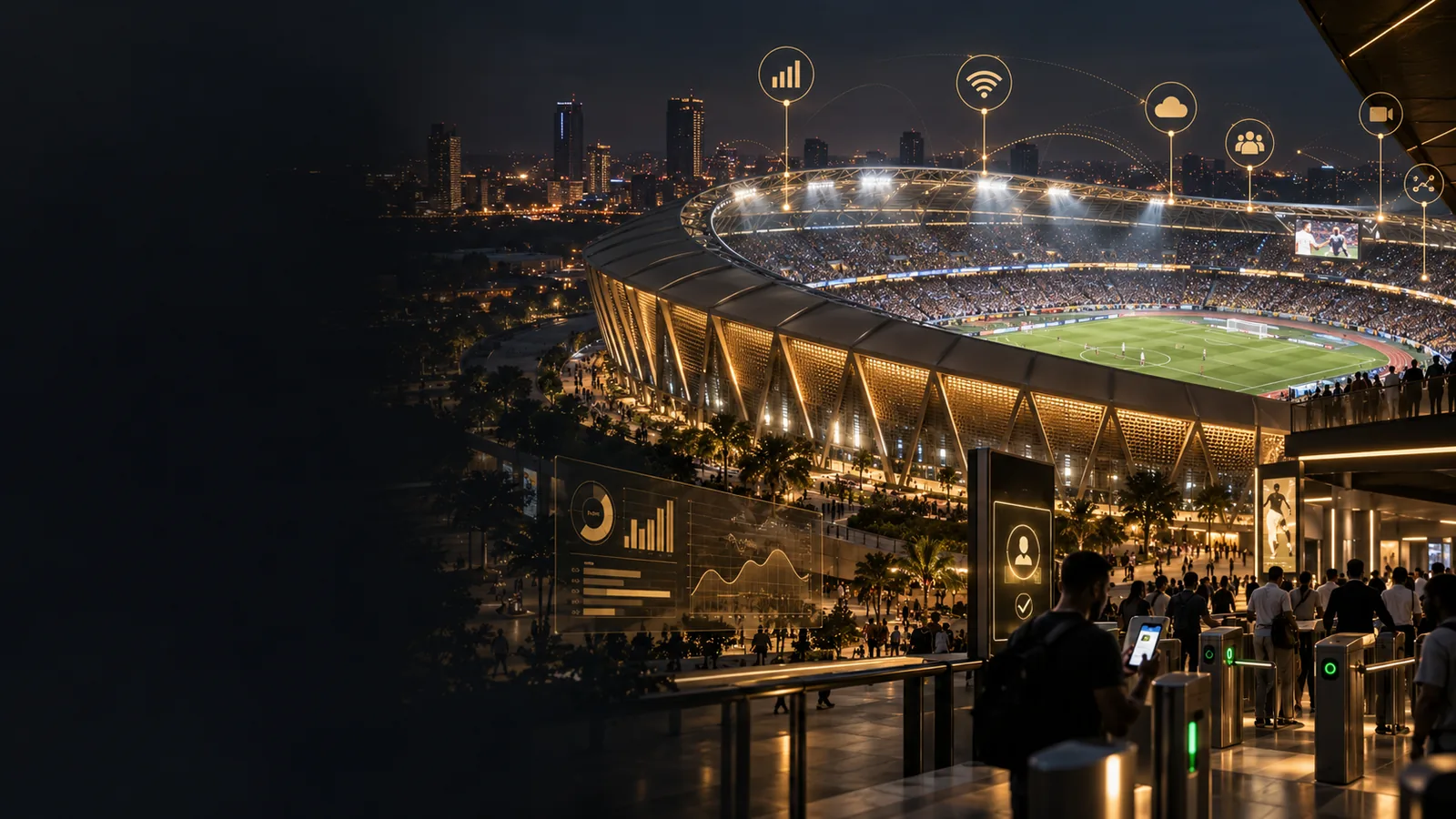
For most of the twentieth century, the defining number attached to a stadium was capacity.
In the next generation of African venues, capacity will still matter. But it will be joined by a different set of numbers: known visitors, repeat attendance, spend per fan, queue time, connectivity quality, digital engagement, hospitality utilisation, sponsor interactions and non-match-day revenue.
The stadium is becoming a data platform.
Identity begins at the gate
Digital ticketing can create a persistent relationship between venue and visitor. When the ticket is linked with appropriate consent to a fan account, the venue can understand attendance history, preferred events, seating behaviour and purchase patterns.
That changes the commercial model. Instead of selling a seat once, the operator can build a long-term customer relationship.
The same identity can connect to parking, food and beverage, merchandise, loyalty and sponsor rewards.
Connectivity is the nervous system
None of this works without resilient connectivity.
DP World Wanderers Stadium in Johannesburg has been described as the first stadium in Africa equipped with 5G connectivity. The Lions cricket union has also developed a fan application and uses the venue year-round for offices and events.
During AFCON in Côte d'Ivoire, Orange worked with network partners to deploy stadium connectivity capable of supporting dense, data-heavy crowds. These projects show why connectivity must be designed as core venue infrastructure rather than an afterthought.
The network supports fans, but it also supports security, media, payments, operations and sensors.
Every touchpoint can generate operating intelligence
Access control indicates arrival patterns. Point-of-sale data reveals demand by stand and time. Connectivity data can show congestion. CCTV and computer vision can assist crowd flow. Environmental sensors can support energy management. Maintenance systems can identify equipment failure.
The value comes from combining these signals in a single operational picture.
A smart venue is not one with many disconnected technologies. It is one where information can move across systems and improve decisions.
Sponsorship becomes location-aware and measurable
Venue data can also improve commercial inventory.
A sponsor can activate differently by gate, stand, hospitality area or fan segment. Digital signage can be scheduled dynamically. Offers can be delivered inside the venue app. Redemptions can be measured.
This creates a stronger alternative to static exposure, particularly for brands seeking measurable customer interaction.
The platform should operate 365 days a year
The most important stadium data may be collected when no match is taking place.
Mixed-use facilities, offices, hospitality, conferences, entertainment and community events create year-round customer flows. The more the venue operates as a district rather than a match bowl, the more useful its data becomes for planning, leasing and investment.
That is why the smart-stadium thesis and mixed-use thesis increasingly converge.
Data governance is part of venue design
Connected venues handle sensitive information: identity, payment, movement and sometimes biometric data. Cybersecurity, consent, retention and vendor access therefore need to be designed into procurement from the beginning.
A stadium should not become “smart” by creating uncontrolled data silos across dozens of contractors.
SIA takeaway
The next generation of African venue will be judged not only by how many people it can seat, but by how intelligently it can operate. A connected stadium can become a measurable commercial platform linking fan identity, payments, sponsor activation, broadcast operations and year-round utilisation. That intelligence can materially improve both revenue and investability.
Editorial source notes
Acronis case study, DP World Wanderers Stadium, April 2025.
Orange / ANDREW stadium connectivity case study for AFCON in Côte d'Ivoire.
HPE sports-and-entertainment smart venue framework.
Zaria Court Kigali mixed-use venue model.
Published by the Sports Intelligence Africa editorial team.